

Nabe (or nabemono 鍋物, なべ物), is a type of Japanese one-pot dish where a big pot is heated in the middle of the table, and the diners cook the food themselves. Nabe is usually served during the colder fall and winter months when families and friends gather together and share a big stew.
There are several different varieties depending on the ingredients added, and where in Japan the recipe originated. One of the most well-known types in the US is sukiyaki (すき焼き), which consists of thinly sliced beef along with many vegetables and tofu and is boiled in a teriyaki-like sauce of soy sauce, sugar, and mirin. The ingredients are then dipped in beaten raw eggs before being eaten. At the end, udon or soba noodles can be added to soak up the flavorful broth.
Shabu-shabu (しゃぶしゃぶ, literally meaning “swish swish”) is very similar to sukiyaki, though the broth is more savory than sweet. The broth may just be water, or else lightly flavored with konbu (seaweed). Ingredients are then dipped in ponzu (see below) or sesame sauce.
Oden (おでん) is another variety where food can be added at any time instead of only at the beginning. Ingredients in addition to the ones below may include boiled eggs, carrots, potatoes, green onions, and more.
Common Nabemono Ingredients:
 |
Daikon (ダイコン) A large, mild radish native to East Asia. It can be eaten raw, cooked, pickled, or grated. |
 |
Ponzu (ポン酢) A tart, citrus-based sauce used for dipping ingredients in shabu-shabu or other dishes. It is made with mirin, rice vinegar, katsuobushi, konbu, and citrus juice (such as yuzu [like a grapefruit], sudachi, daidai [a bitter orange], kabosu, or lemon). |
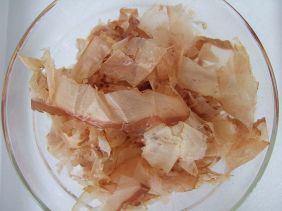 |
Katsuobushi (かつおぶし) Dried, fermented, and smoked flakes of skipjack tuna, also known as bonito. It’s often used to make dashi (fish stock), and as a topping for many Japanese foods. |
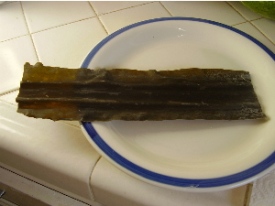 |
Konbu (昆布) Edible kelp seaweed often used to make dashi soup stock in Japan. It can be pickled, dried, and even made into tea (which tastes like the ocean to me). |
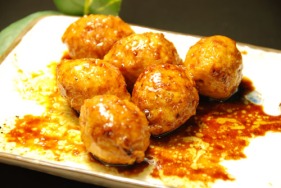 |
Tsukune (つくね) Fish or meat balls (if meat, usually chicken). The fish balls I’ve had have been gray and sometimes disturbingly crunchy (bones, fins, and eyes are all included). They are often featured in some miso soups as well. |
 |
Tofu (豆腐) Often seared or grilled, but sometimes just boiled raw in the pot. |
 |
Hakusai (白菜) Chinese cabbage. |
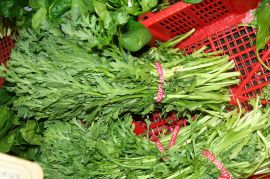 |
Shungiku (春菊) Edible crysanthemum greens. It’s often used in Cantonese cuisine, but is popular in Japan as well. |
 |
Shiitake (椎茸) Common Japanese mushroom used in many dishes. Can be dried, sauteed, or boiled. Usually only the caps are used. |
 |
Enokitake (エノキタケ) Also known as enoki, these are available fresh or canned. |
 |
Soba (そば) A type of thin buckwheat-flour noodle. They are often served chilled in summer and hot in winter. Can be made into many different kinds of soup. |
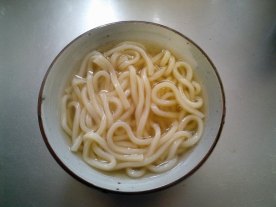 |
Udon (うどん) A type of thick wheat-flour noodle. Like soba, these are often served cold in summer and hot in winter. Can be a part of many kinds of soup dishes, depending on the toppings. |
 |
Kamaboko (蒲鉾) Processed fish cakes made from varieties of whitefish and additives like MSG. Spiral-shaped loaves are often called “naruto” after the Japanese city which has a well-known whirlpool. The white fish paste is called surimi (擂り身), and is also present in fake crab in the US. |
 |
Chikuwa (竹輪) Another surimi product made with salt, sugar, starch, and egg whites along with the fish. |
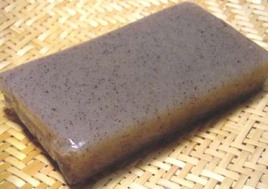 |
Konnyaku (こんにゃく) A mottled gray, firm gelatin-like substance which is mostly flavorless. The blocks can be cut into thin noodles and used in oden or sukiyaki. The gel itself is made from plants. |